
Japanese Design Archive Survey
DESIGN ARCHIVE
Designers & Creators
Kenya Hara
Graphic Designer
Interview: 30 July 2025, 11:00–12:00
Location: Nippon Design Center, Inc.
Interviewee: Kenya Hara
Interviewers: Yasuko Seki, Tomoko Ishiguro
Author: Tomoko Ishiguro
PROFILE
Profile
Kenya Hara
Graphic Designer
1958 Born in Okayama Prefecture
1981 Graduated from the Department of Science of Design, College of Art and Design, Musashino Art University
1983 Completed the Master’s Programme in Design, Graduate School of Art and Design, Musashino Art University
1983 Joined the Nippon Design Center
1992 Established the “Hara Design Institute” within the company; has presided over the institute ever since
2003 Appointed Professor, Department of Science of Design, College of Art and Design, Musashino Art University
2014 Appointed Representative Director of the Nippon Design Center
Description
Description
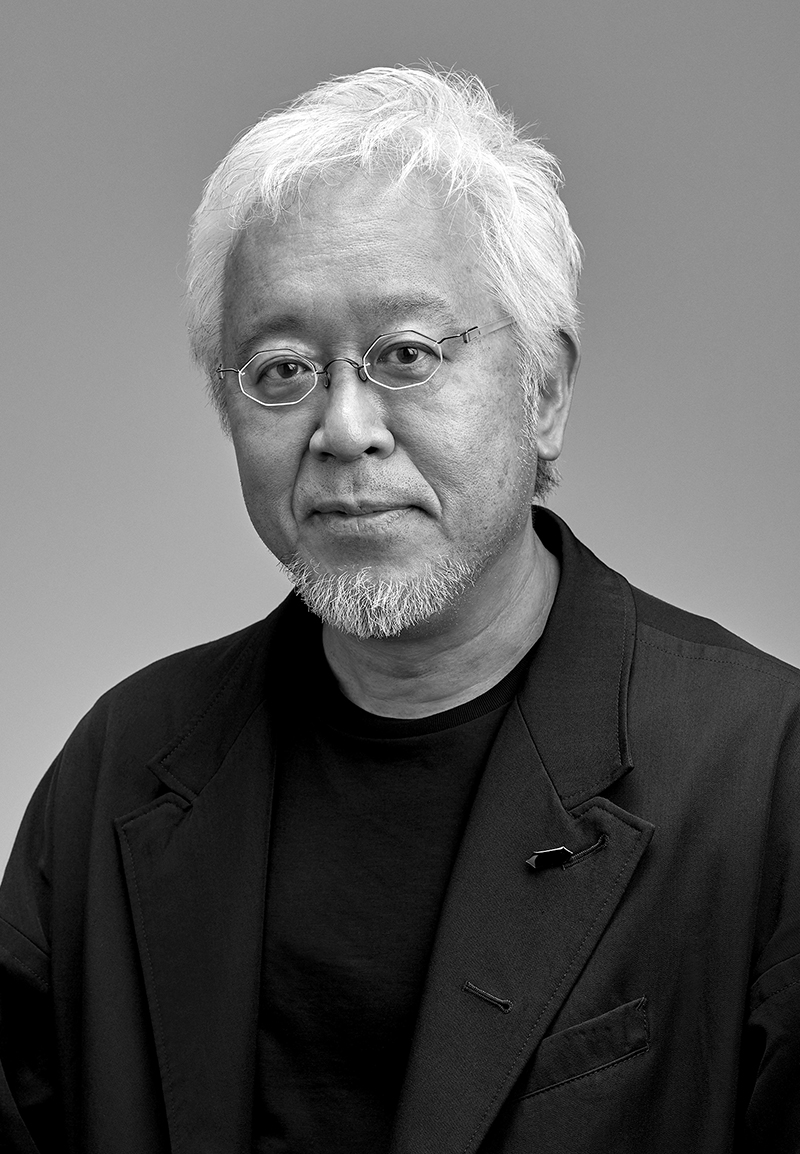
Design is not merely the act of creating objects, but rather the act of identifying and editing the relationships and contexts that already exist within society—this is Kenya Hara’s view. Based at the Nippon Design Center, he has expanded the scope of design across various disciplines, from his art direction for MUJI to exhibitions such as “RE-DESIGN”, “HAPTIC” and “HOUSE VISION”.
The turning point came with the “RE-DESIGN: The Daily Products of the 21st Century” exhibition at the TAKEO PAPER SHOW in 2000. Daily products redesigned by leading creators demonstrated a fresh perspective whilst simultaneously highlighting the sophistication of design found in everyday life. In doing so, the very notion of curation was redefined. From that point onwards, Hara’s focus shifted from ‘making’ to ‘noticing’.
Drawing on his experience of working on numerous projects—such as exhibitions and spatial installations—that are difficult to preserve in tangible form, Hara regards archives not merely as repositories for preservation, but as resources to be ‘edited’. Through books and reconfigured exhibitions, he preserves his work in a form where meaning emerges over time. This practice has also borne fruit in his writings, beginning with “DESIGN OF DESIGN” (2003).
Furthermore, at MUJI, guided by the philosophy of “This Will Do (Kore-de-Ii)”, he has proposed designs that quietly enhance the quality of life through negative space and a sense of transparency, rather than through strong forms or assertions. This approach—of designing not individual products but the atmosphere surrounding everyday life—is also an attempt to nurture users’ literacy and to appeal directly to their sensibilities and instincts.
Hara has named his project to re-examine the Japanese archipelago “High Resolution Tour”, likening it to the act of flying low to observe with high resolution. In his own work, too, he aims for design that gradually grows into its intended form, rather than seeking immediate results or an impact that leads directly to purchases. This endeavour is a process of enriching culture and slowly nurturing future industries from deep within culture.
Masterpiece
Masterpiece
Exhibitions
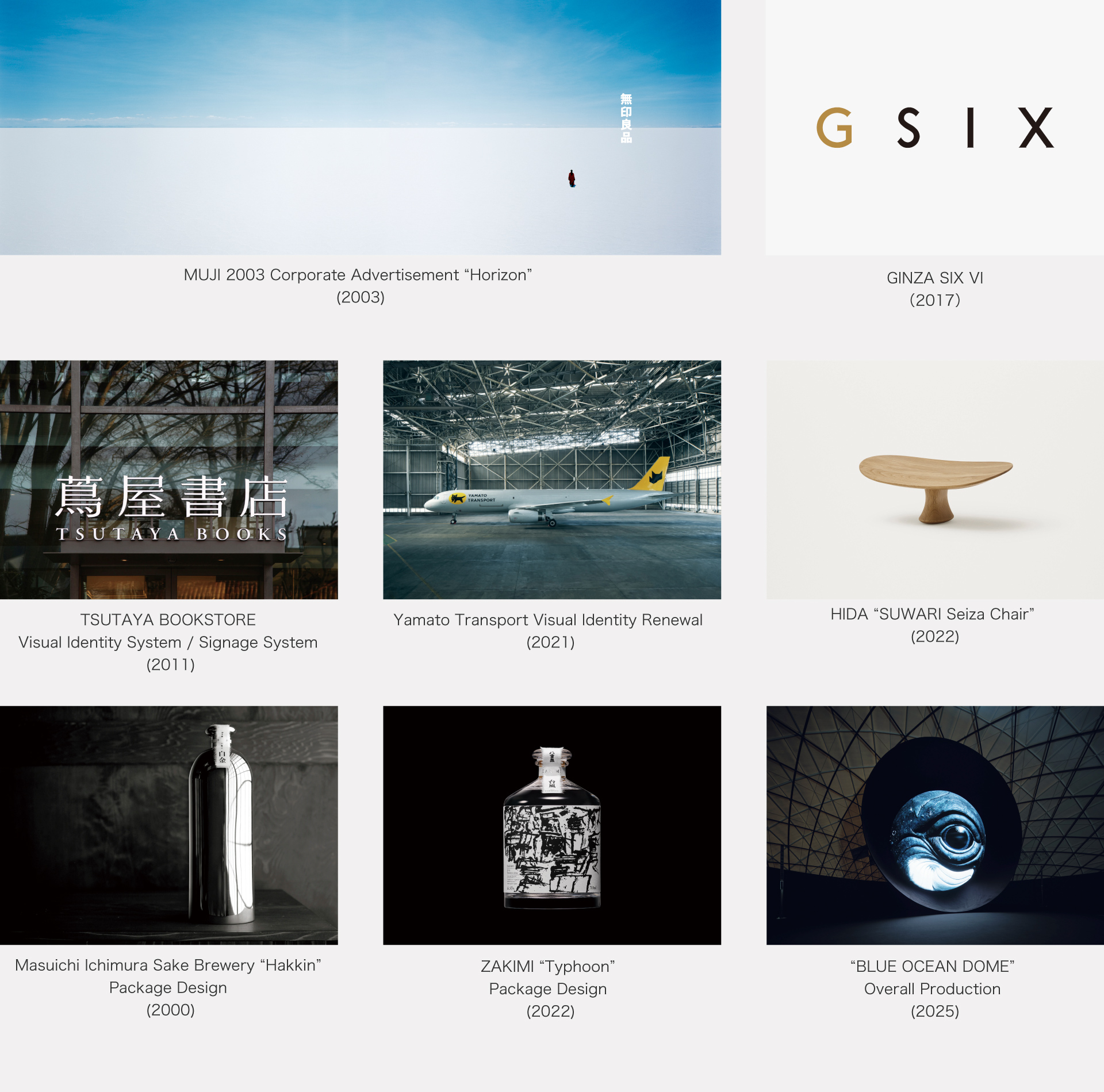
TAKEO PAPER SHOW (*1) “RE-DESIGN: The Daily Products of the 21st Century” (2000), “HAPTIC: Awakening the Senses” (2004), “SUBTLE” (2014), “PACKAGING: Function and Laughter” (2023), “JAPAN CAR: DESIGNS FOR THE CROWDED GLOBE” (2009), “HOUSE VISION” exhibition (2013–) (*2), “NEO-PREHISTORY: 100 Verbs” exhibition (in collaboration with Andrea Branzi), Triennale di Milano (2016)
*1 A series of exhibitions held under the title “TAKEO PAPER SHOW”, which toured various locations around the world and had a significant international impact.
*2 "JAPAN CAR: Designing for a Saturated Society” toured Japan and overseas, beginning in London. "HOUSE VISION" reimagined the house as the point of intersection between society and industry, bringing together companies, architects and creators to present concrete visions for the future. It was held four times in Tokyo, Beijing and Seoul.
Expo and Olympic-related design
Nagano Olympic Games Opening and Closing Ceremony Programmes (1998), Japan International Exposition 2005 (Expo 2005 Aichi) (2005), Overall Production of “BLUE OCEAN DOME” (Japan International Exposition 2025 [Osaka-Kansai Expo]) (2025)
Art Direction
MUJI (2002-)
Overall Production
Ministry of Foreign Affairs “JAPAN HOUSE” (2017–)
Branding / VI Design
Matsuya Ginza, Mori Building, Tsutaya Books, GINZA SIX, Mikimoto, Yamato Transport, Xiaomi (China), ATONA
Projects
“High Resolution Tour” (2019–)
Major Solo Exhibitions
“Graphic Design by Kenya Hara”, Design Gallery 1953, Tokyo (1992); “Kenya Hara Exhibition”, Ginza Graphic Gallery, Tokyo (1994); “Kenya Hara Poster Exhibition”, Poznań City Gallery, Poznań, Poland (2000); “Kenya Hara Poster Exhibition: Graphic Intensity in Mid-Tones”, The Japan Foundation, Toronto Japanese Cultural Centre, Canada (2001); Touring Exhibition, Museo Tomás Chávez Morado, Guanajuato, Mexico (2001); Touring Exhibition, The Japan Foundation, São Paulo Japanese Cultural Centre, Brazil (2001); “Kenya Hara: Henshū Sareta Shigoto (Edited Works)”, Creation Gallery G8, Tokyo (2001); “Kenya Hara: Henshū Sareta Shigoto (Edited Works)”, Mitsubishi-Jisho ARTIUM, Fukuoka (2002); “KENYA HARA Exhibition”, Hong Kong Design Centre, Hong Kong (2002); “KENYA HARA Exhibition”, Japanese Art and Technology Centre, Kraków, Poland (c.2003); “White: Kenya Hara”, Ginza Graphic Gallery, Tokyo (2008); “Kenya Hara Design Exhibition: ‘Books’ – On Having a Friend Who Writes, Munenori Harada”, Musashino Municipal Kichijōji Art Museum, Tokyo (2009); “DESIGNING DESIGN: Kenya Hara China Exhibition 2011”, Beijing Centre for the Arts, Beijing (2011); “DESIGNING DESIGN: Kenya Hara China Exhibition – Shanghai”, Zendai Museum of Modern Art, Shanghai (2012); “DESIGNING DESIGN” China Touring Exhibition, Gehua Camp Art Centre, Qinhuangdao (c.2012); “KENYA HARA GRAPHIC DESIGN EXHIBITION”, Oriental Design Gallery, Hiroshima (2017); “Make the Future Better Than Today”, National Museum in Poznań, Poznań, Poland (2023); “DRAW: Kenya Hara Is Drawing”, Kyoto ddd Gallery, Kyoto (2026).
Books (published in Japan)
“PLEASE STEAL THIS POSTER” Shinchosha (1995), “The Mystery of the Hole in Macaroni” The Asahi Shimbun Company (2001), “DESIGN OF DESIGN” Iwanami Shoten (2003), “DESIGN OF DESIGN Special Edition” Iwanami Shoten (2007), “WHITE” Chuokoron-Shinsha (2008), “PLEASE STEAL THIS POSTER +3” Heibonsha (2009), “Japanese Design” Iwanami Shoten (2011), “Awakening for Design” Kawade Shobo Shinsha (2014), “100 WHITES” Chuo Koron Shinsha (2018), “High Resolution Tour” Iwanami Shoten (2022), “DRAW” Bijutsu Shuppan-sha (2024)
Co-authored works (published in Japan)
“SKELETON- Kenya Hara and Taku Sato: A Collection of Packaging Designs” Rikuyosha (1995), “Architecture and Macaroni” TOTO Publishing (1995), “RE-DESIGN: The Daily Products of the 21st Century” The Asahi Shimbun Company (2000), “OPTIMUM: The Origin of Design” Rikuyosha (2002), “ggg Books 58 Kenya Hara” Ginza Graphic Gallery (2002), “HAPTIC: Awakening the Senses” The Asahi Shimbun Company (2004), “FILING- Chaos Management” Sendenkaigi (2005), “Dialogue in design” Heibonsha (2007), “TOKYO FIBER ‘07 SENSE WARE” The Asahi Shimbun Company (2007), “TOKYO FIBER ’09 SENSE WARE” Asahi Shimbun Publications (2009), “JAPAN CAR―DESIGNS FOR THE CROWDED GLOBE” Asahi Shimbun Publications (2009), “Wan isshiki : Tsukau shikki e” Jitsugyo no Nihon Sha (2010), “MUJI BOOK” Ryohin Keikaku (2010), “HOUSE VISION: Let’s Build Homes with New Standards” Heibonsha (2012), “HOUSE VISION 2013 TOKYO EXHIBITION” Heibonsha (2013), “ARCHITECTURE FOR DOGS” TOTO Publishing (2013), “SUBTLE” Takeo (2014), “SO SHU JINEN” Ryohin Keikaku (2015), “HOUSE VISION- Separate, Yet Connected; Apart, Yet Together” Bijutsu Shuppansha (2016), “HOUSE VISION 2 2016 TOKYO EXHIBITION” Bijutsu Shuppansha (2016), “Ex-formation” Heibonsha (2017), “GALAPAGOS Photographs” Ryohin Keikaku (2018), “Cleaning” Ryohin Keikaku (2020), “MUJI BOOK 2” Ryohin Keikaku (2020), “The Work of Kenya Hara” (Design Note BOOK) Seibundo Shinkosha (2021), “PACKAGING- Function and Laughter” Bijutsu Shuppansha (2023), “How to Revitalize This Ryokan: Setouchi Design Conference - Volume 1, Miyajima Edition” CE Media House (2022), “The Crucible of Possibility on the Sea: Setouchi Design Conference - Volume 2, Ferry Edition” Nikkei Business Publications (2023), “The Poison and Medicine of Regional Development: Setouchi Design Conference - Volume 3, Kurashiki Edition” Nikkei Business Publications (2024), “The Sea's Scenario: Setouchi Design Conference - Volume 4, Onomichi & Fukuyama Edition” Nikkei Business Publications (2024), “Resetting the Goal: Setouchi Design Conference – Volume 5, Setoda Edition” Nikkei Business Publications (2025), “BLUE OCEAN DOME - Let’s Talk to the Sea.” ZERI JAPAN (2025)
Awards
Mainichi Advertising Design Award, Third Prize in the Special Selection: Suntory Wine Réserve (newspaper advertisement) (1984); Mainichi Advertising Design Award, Second Prize in the Special Selection: Kirin Canned Beer (newspaper advertisement) (1985); Design Forum ’87, Bronze Award: Wacoal Calendar 1987 (1987); Design Forum ’89, Gold Award: Theatre poster for “What’s in the Box” (1989); JAGDA Newcomer Award (1990), Tokyo ADC Award: Takeo Paper World ’90 (Poster) (1990); Tokyo ADC Award: Takeo Paper World ’91 (Poster) (1991); Kodansha Publishing Culture Award - Book Design Award: “PLEASE STEAL THIS POSTER” (1996); Japan Culture Design Award (1996); Asia-Pacific Poster Design Exhibition Poster Award: “MUSUBI” Poster Series (1997); New York ADC Overseas Exhibition Special Award: “im product” Catalogue (1998); Sign Design Grand Prix - Minister of International Trade and Industry Award: Umeda Hospital Signage Plan (1998); National Catalogue and Poster Exhibition - Minister of International Trade and Industry Award: Takeo Vannouvo Sample Book (1999); Minister of International Trade and Industry Award, National Catalogue and Poster Exhibition: EXPO 2005 Poster (1999); Prime Minister’s Award, National Calendar Exhibition: EXPO 2005 Calendar (1999); Tokyo ADC Award, Hara Hiroshi Award: “RE-DESIGN” and “Paper and Design” (2000); ICSID Excellence Award; ICOGRADA Excellence Award: “RE-DESIGN” Exhibition (2000); Mainichi Design Award: Takeo Paper Show 2000 “RE-DESIGN” Exhibition, Art Direction for the book and exhibition “Paper and Design” (2000); Yusaku Kamekura Award: Book design for “Paper and Design” (2001); Tokyo ADC Award Grand Prix: MUJI “Horizon” Campaign (2003); Suntory Arts and Sciences Award: “DESIGN OF DESIGN” (2004); CS Design Award, Signage Category, Gold Prize: Nagasaki Prefectural Art Museum signage project (2006); SDA Award, Signage Design Grand Prize: NICOLAS G. HAYEK CENTER video signage project (2008), SDA Award, Signage Design Grand Prize: WAVING INFORMATION (2008); SDA Award, Grand Prize for Signage Design and Minister of Economy, Trade and Industry Award: WATER LOGO (2008); Japan Package Design Grand Prix, Gold Award: Daikanyama Tsutaya Bookstore VI Design (2013); JAGDA Award, Environment and Space Category: HOUSE VISION 2013 TOKYO EXHIBITION (2014); D&AD Yellow Pencil: Pierre Hermé “Ispahan” Packaging (2014); Wallpaper* magazine Top 20 Graphic Designers “King of Simplicity” (2015); New York Festivals World’s Best Television & Films Gold World Medal, Silver World Medal: Singapore-produced documentary “Creative Hero” (featuring Kenya Hara) (2015); JAGDA Award, Environment and Space Category: Minna no Mori Gifu Media Cosmos (2016); Japan Sign Design Award - Grand Prize for Sign Design: Minna no Mori Gifu Media Cosmos Signage Plan (2016); All Japan Advertising Federation Japan Advertising Award - Yamana Prize (2016); Good Design Best 100: HOUSE VISION 2 2016 TOKYO EXHIBITION (2017); Newsweek Japan “100 Japanese People Respected Around the World” - Rest of the Best (2019); National Calendar Exhibition, Japan Printing Industry Federation: Chairman’s Award and Gold Award in Category 1: Morisawa 2020 Corporate Calendar (2020); Jan Lenica Award Laureate (2020); Tokyo ADC Award, ADC Members’ Award: MUJI “Why Does It Feel Good?” Campaign (2020–21); Cannes Lions International Festival of Creativity, Brand Experience & Activation Lions, Bronze Lion: MUJI “Why Does It Feel Good?” Campaign (2020–21); DFA Lifetime Achievement Award (2023); Medal with Purple Ribbon (2024); Compasso d’Oro: SUWARI (2025); Good Design Best 100: Osaka - Kansai Expo Private Pavilion - Blue Ocean Dome (2025)
Interview
Interview
What Archives Need Is Not ‘Preservation’ but ‘Curation’
How I Differ from Those Who Came Before
ー Mr Hara, you are the representative of Nippon Design Center, while also leading the Hara Design Institute, an independent unit within the organisation.
To begin with, could you tell us how you intend to preserve both the archives accumulated by the organisation and the records of your own personal work?
Hara As for Nippon Design Center, in addition to our portfolios, we have been examining our work and building a digital archive of it for the past twenty years or so. However, as works involving motion or interaction—such as videos and motion graphics—and projects that need to be understood as complete works are increasing, determining how best to preserve them remains a challenge.
ー Nippon Design Center has produced a constellation of leading designers over the years, including Yusaku Kamekura, Hiromu Hara, Ryuichi Yamashiro, Ikko Tanaka, Kazumasa Nagai and Tadanori Yokoo… Surely you must have a vast archive?
Hara That is true, but works created whilst they were employed here but which went beyond the scope of the company as individual endeavours are not included in the archive; even in the case of Tadanori Yokoo, there are not many works from his time here. Even when viewed as a whole, the archive itself is not actually that extensive.
Standard formats, such as posters, are relatively easy to archive. Kazumasa Nagai continued to produce three posters a year even at the age of 96, leaving behind several thick portfolios of his work. If you open one of them roughly in the middle, you’ll find works he created when he was about 65. Looking at the trajectory of his work over such a long period, I realise I’m only halfway there myself. Archives allow future generations to follow that trajectory, draw inspiration from it and reflect on their own work.
ー I see. Archives of graphic designers tend to be more comprehensive than those in other genres; this may be partly because the work is easier to preserve, but also because it is more readily accessible.
Hara I also made posters in my early days, and graphic design is where I started. However, Nagai once said to me, “You and I are quite different, aren’t we?” In fact, I’ve always been conscious of that difference in my own work.
Our predecessors cultivated the land and built the roads, and whilst our generation raced along them in sports cars and motorbikes, we stepped off the road and into the fields.
We’ve walked without being confined by disciplinary boundaries - to the extent that thinking of exhibitions as a medium or using the term ‘interdisciplinary’, now feels rather old-fashioned. I’ve approached design with the belief that it cannot be divided into disciplines; it is one integrated whole. I’ve tended to consider graphic design, packaging, spatial design and product design all within the same framework. As a result, my projects have spanned a wide range of fields.
Design Doesn’t End When the Work Is Finished
Hara It’s difficult to document exhibitions and spatial projects, isn’t it? An exhibition derives its meaning from the way it is installed. The way the space is conceived is crucial, and the display fixtures are also designed. It’s impossible to preserve everything exactly as it was, and exhibits deteriorate over time. Even if you were to bring in old exhibits and recreate the display, it would be pointless if they had lost their original vitality.
ー So it’s difficult to create an archive that remains meaningful?
Hara Rather than simply preserving them as physical objects, we need to think about how to edit and curate them as resources. In other words, whether to turn them into a book, or to ensure the documentation can be re-edited. For exhibitions I’ve curated so far, such as the “Takeo Paper Show”, I designed them so they could easily tour and have also published them in book form. I’m now beginning to consider an exhibition that re-edits my own work. Exhibitions are, in a sense, reproducible. That allows me to edit my work anew.
I’m not sure whether that can be called an archive, but if I can edit my own work and record it in some form, I might be able to leave behind a kind of trace that might itself be called an archive. That’s what I’m thinking about.
ー There’s also the issue of the There’s also the issue that digital media are surprisingly fragile, isn’t there? Just as floppy discs have disappeared, digital data is surprisingly ephemeral.
Hara Exactly. It seems convenient, but it’s easily lost. That’s why I do think it’s necessary to preserve my work in printed form as well.
ー You have, in fact, published numerous books.
Hara I was approached by the Swiss publisher Lars Müller Publishers to publish a book, and when I spoke to the director, Lars Müller, he told me, “The era of the portfolio is over. If we’re going to do this, you must be the author yourself”. It was just after I’d written “DESIGN OF DESIGN”, so I translated that text into English and developed the book by incorporating records of my own work and exhibitions. As a result, it has been translated into multiple languages and is read all over the world. I’ve really come to appreciate the power of preserving work in print.
ー So you’re re-editing it.
Hara Because completing a project isn’t where design ends. When you’ve just finished a project, your desire for others to see it takes precedence. But as time passes and I revisit my work—re-editing new and old pieces together—meanings and significance that were initially hidden begin to emerge through being placed in a broader context. I said I’m still only halfway there compared to Mr Nagai, but even so, my work is gradually becoming more distilled. I believe that by repeatedly compiling my work into books or exhibitions, something will eventually come into view.
RE-DESIGN
The Realisation That Even the Most Talented Cannot Surpass the Ordinary.
ー Just as Mr Nagai put it, Masayoshi Nakajo, whom I interviewed whilst he was still alive, also remarked: “Our generation was asked to create stylish packaging because we were capable of producing such products, but designers born in the 1950s, such as Mr Hara and Taku Sato, were commissioned from the planning stage onwards—it was a completely different matter”. I feel that your generation were pioneers who ventured off the beaten track in search of new horizons. What was the catalyst for you?
Hara It was the 2000 Takeo Paper Show exhibition, “RE-DESIGN: The Daily Products of the 21st Century”. That served as a turning point for me. My original hypothesis was completely overturned. I’d started the project with the idea that if outstanding creators were to redesign everyday objects, they would be able to improve on existing designs.
We asked Shigeru Ban to ‘re-design’ toilet paper, Masahiko Sato to re-design immigration stamps, Kengo Kuma to re-design cockroach traps, Kaoru Mende to re-design matches, Kosuke Tsumura to re-design nappies, and Naoto Fukasawa to re-design tea bags… and so on, asking them to ‘re-design’ a wide range of everyday items. Starting with the square roll of toilet paper, each design was marvellous in its own right; yet when we actually put the square toilet paper onto the production line, it would tear, or the finished product would be so quirky that people quickly grew tired of it.
It made me realise that everything in the world has already been designed, and that only the strongest survivors among them have endured to the present day. I was brought home to the stark realisation that these were not designed by anyone with outstanding talent, but were rather examples of ‘Becoming’ Design. In the end, the exhibition demonstrated that even when talented designers take on a challenge, they cannot surpass the design of an ordinary drinking glass. This was a shock, and from then on, my perspective on design changed.
Until then, I had thought that the role of design was to make people say, “Wow, that’s amazing!”, but I came to realise that this was not the case; instead, I became conscious of the importance of designs being chosen unconsciously and continuing to function effectively over the long term. Around that time, I had also begun working with MUJI, which led me to reflect on these matters even more deeply. I realised that there are things you can only see once you’ve fundamentally changed the way you think.
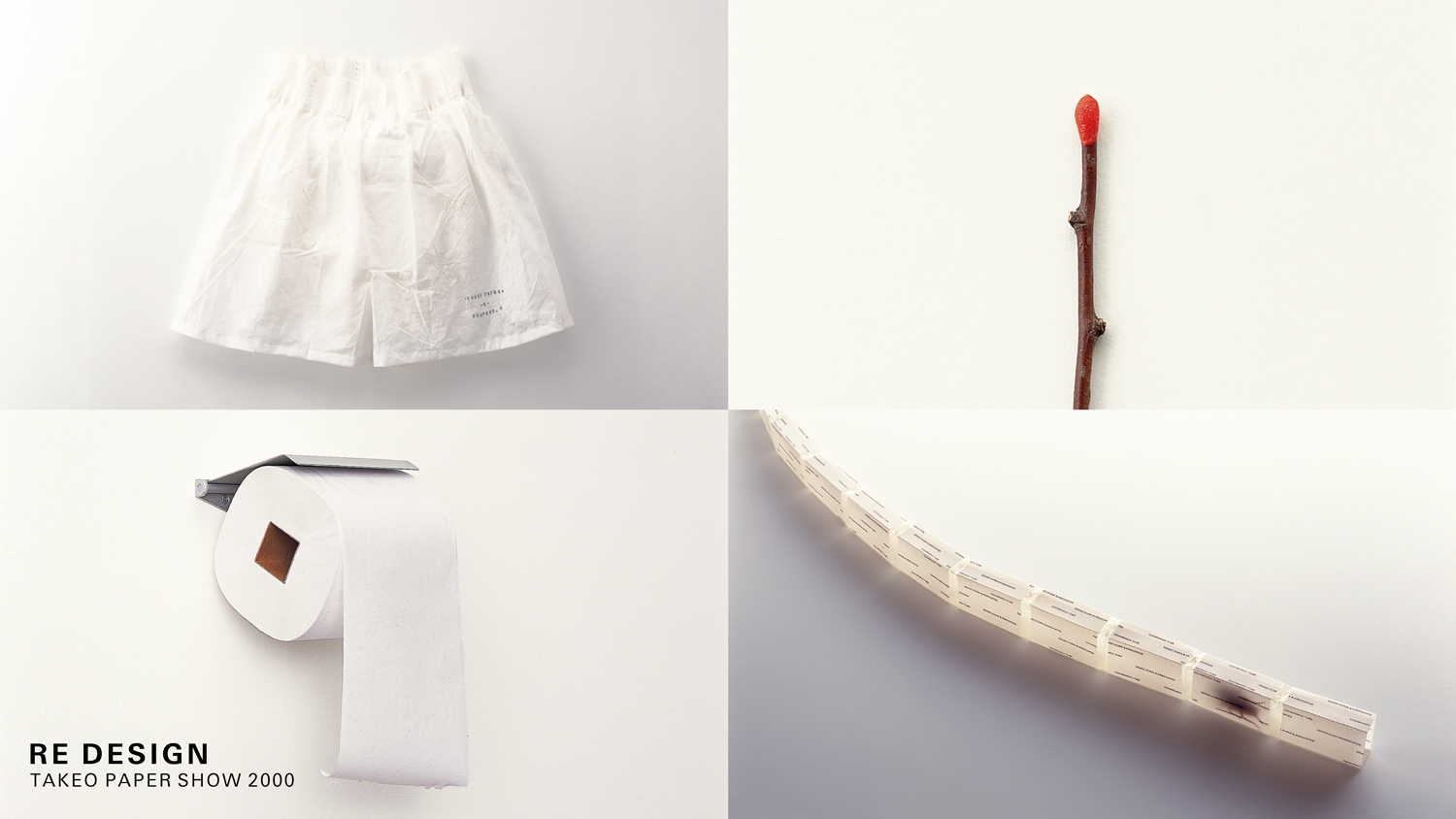
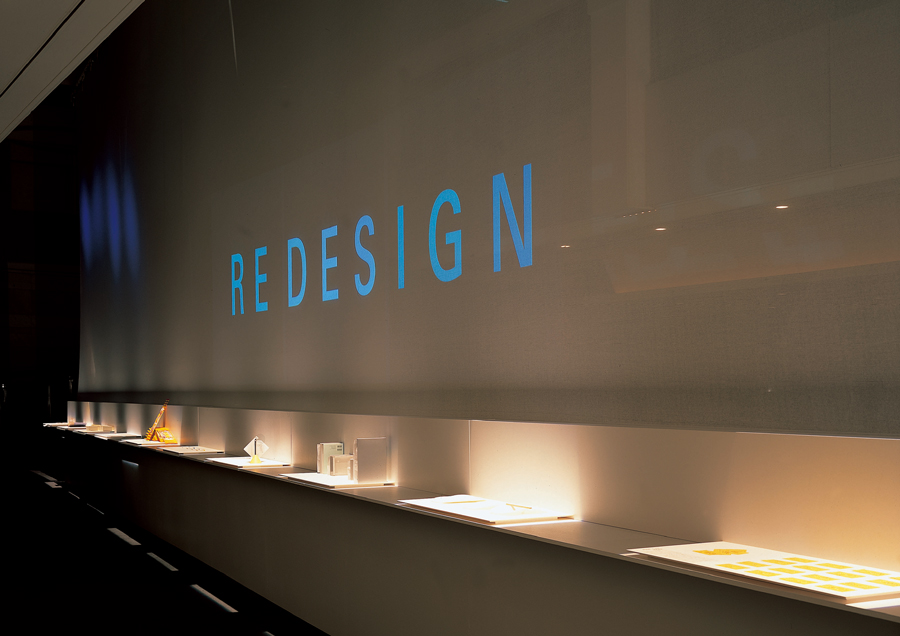
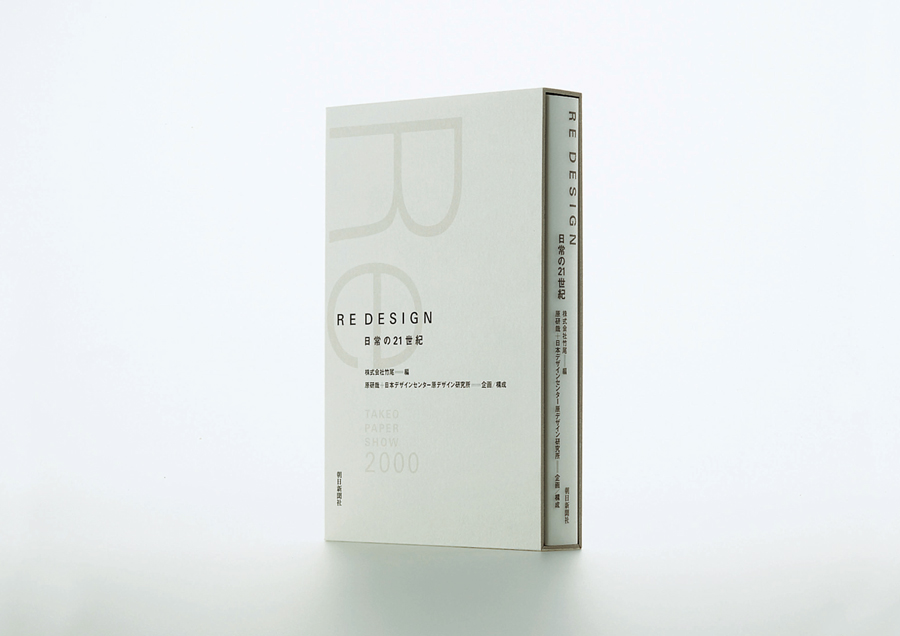
TAKEO PAPER SHOW “RE-DESIGN: The Daily Products of the 21st Century” (2000)
Viewing the World Through Multiple Facets
From ‘HAPTIC’ to ‘HOUSE VISION’
ー And so, by re-examining and overturning assumptions, you have discovered something that lay hidden and given it voice. How do you go about discovering these things? Do you set yourself any specific goals?
Hara When you take on work regardless of the field, it just keeps expanding from there. You start receiving commissions for exhibitions, packaging, brand visual identities, book design and residential space design. It’s like being a juggler: you might only be holding a few things in your hands, but there are always over a hundred projects floating in the air. As a result, I develop many different points of contact with society, so the landscape I perceive inevitably changes. I believe this is the fate of contemporary designers in general, not just myself.
As I condense work from many different fields into books or reflect on it, I also begin to see what can be stripped away. In today’s world, driven by IT and technology, information has become concentrated on the senses of sight and hearing; as a result, the number of people who have become desensitised to other senses has increased. It was against this backdrop that the 2004 TAKEO PAPER SHOW exhibition, “HAPTIC: Awakening the Senses”, focused intently on what it means for humans to feel, perceive and experience comfort.
ー TAKEO PAPER SHOW has frequently presented innovative themes. This “HAPTIC: Awakening the Senses” exhibition caused quite a stir by presenting paper as a futuristic material capable of shaping the environment.
Hara ‘Haptic’ means something like ‘to make the sense of touch tingle’; the inspiration came from someone in Germany remarking that ‘the feel of washi paper is haptic’. Although the word wasn’t in the dictionary I had at the time, a search on the internet revealed it was gaining attention as a topic in sensory research. The shift from ‘technology-driven’ to ‘sense-driven’ thinking lies at the heart of this exhibition. Therefore, I asked the participating creators, “Do not start with form. Make the stimulation of touch your primary motivation.”
ー The insights gained from “HAPTIC” led to the “HOUSE VISION” project, which began in 2013. With the aim of creating homes based on a new set of norms that took into account the ageing population and energy conservation, we collaborated with architects to present full-scale houses, establishing a platform to visualise future lifestyles incorporating information technology. In 2016, the project was expanded and held in Tokyo, attracting 38,000 visitors. It was subsequently held in Beijing, China, in 2018, and in Seoul, South Korea, in 2022.
Hara To begin with, I have always loved architecture and have worked with many architects. Architects are undoubtedly blessed with extraordinary talent, but there are numerous examples where projects have become explorations of architecture’s potential. On the other hand, although housing is vital to human beings, its unassuming, fundamental aspects have not evolved significantly since ancient times. In fact, a pit dwelling might be richer in experience than a single flat in a modern block of flats.
A home where people live is, so to speak, a crossroads of industries. If we consider the home to be a place where various elements—communication, transport, logistics, healthcare, community, robotics, tradition…—intersect and fuse, the current functions of housing have not yet moved beyond the scope of mere housing.
And so, I came to realise that architects are not the only ones capable of proposing innovative ‘homes’. I wanted to suggest that if we re-examine the ‘home’ from an industrial perspective, it becomes something entirely different.
However, when it comes to computing, Japan faces challenges as it has not yet developed operating systems or AI—the cornerstones in Othello—but I believe the ‘home’ is also one of these vital cornerstones. I intend to continue presenting “HOUSE VISION” in increasingly developed forms. I believe it could one day become a major event on a par with the Salone del Mobile in Milan. We have held four exhibitions to date, both in Japan and abroad; I have gained valuable insights from these experiences, and our focus has shifted towards raising these questions.
I organised this project anticipating that society would increasingly recognise the need to view housing from a perspective other than that of an architect. Whilst the results have not yet fully materialised as I had intended, I believe the insights gained from this experience will prove valuable in the future. I intend to distil and reflect on these insights, consider how best to organise them for the next phase, and utilise them as an archive.
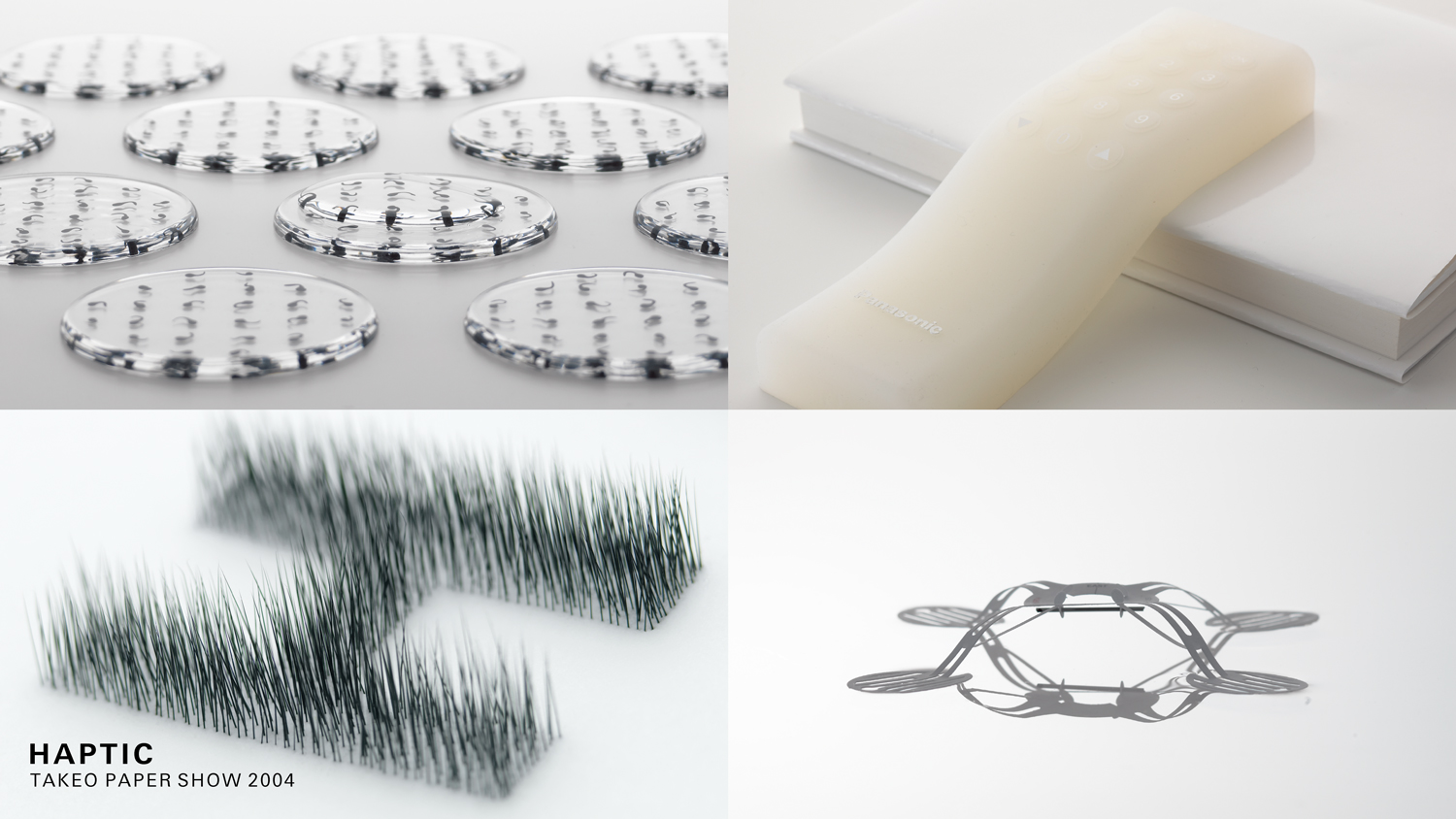
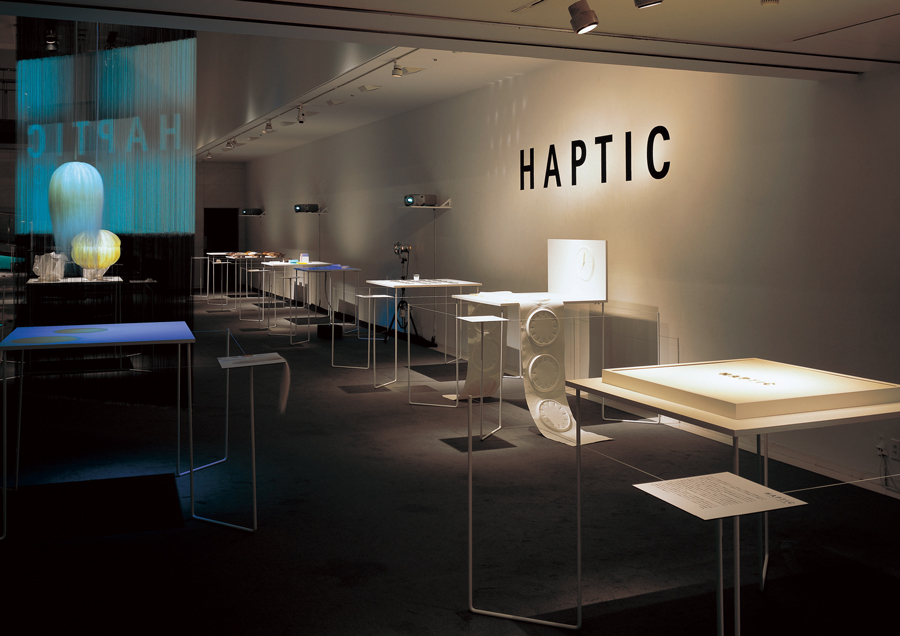
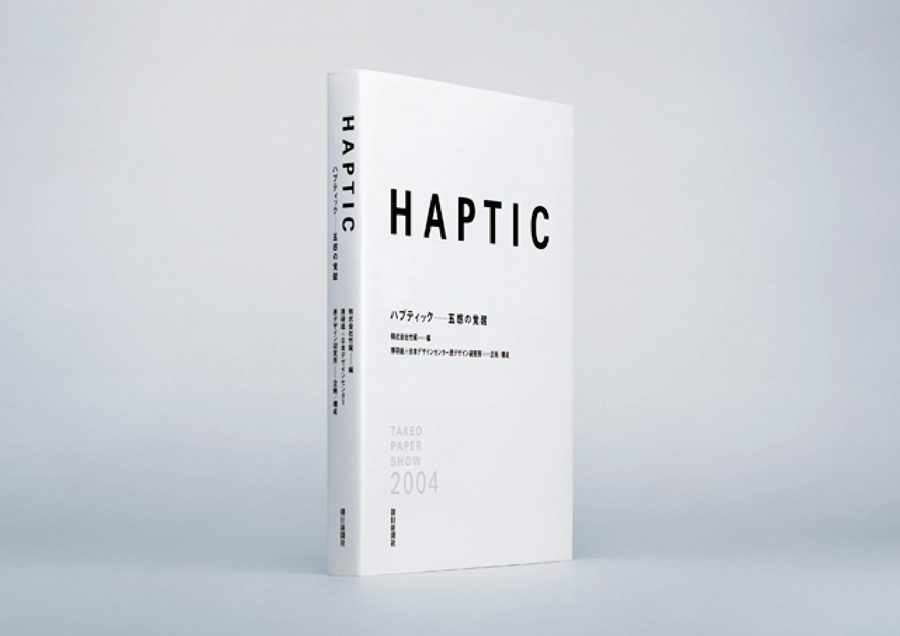
“HAPTIC: Awakening the Senses” (2004)
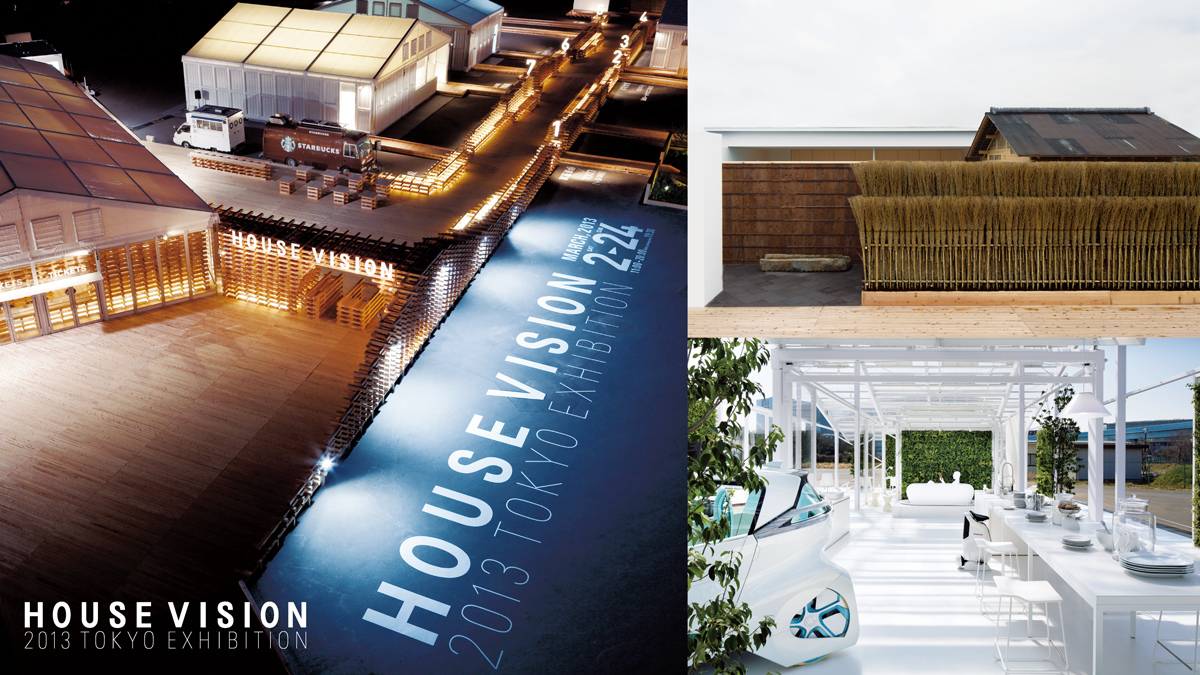
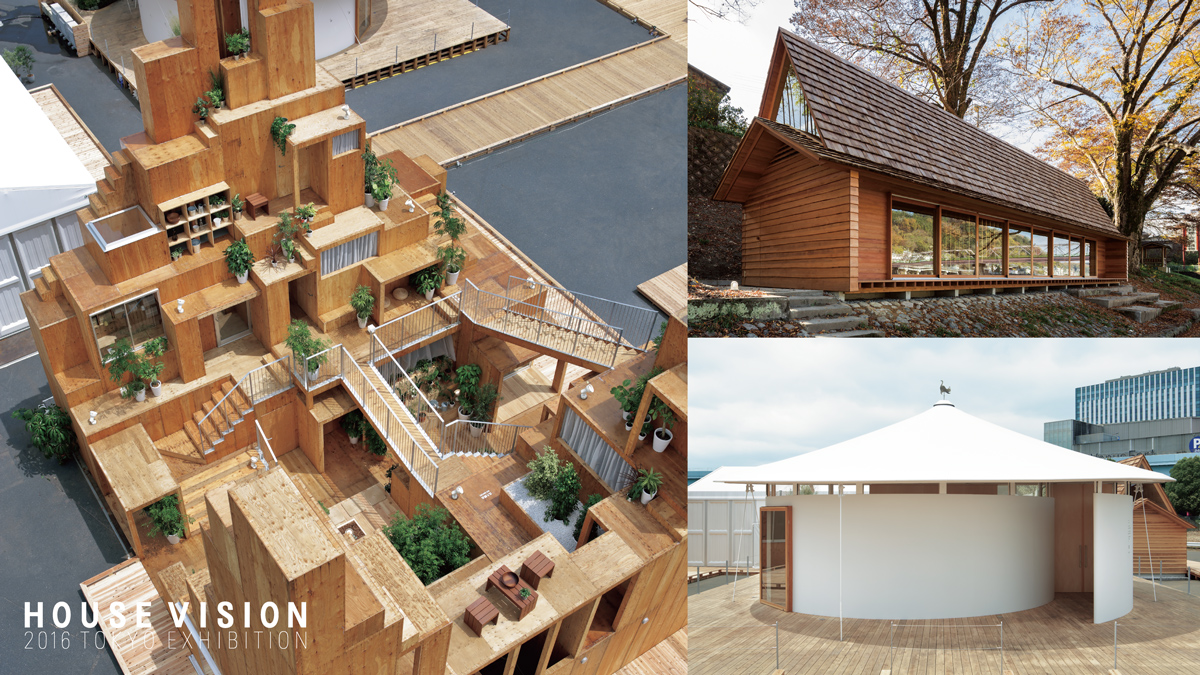
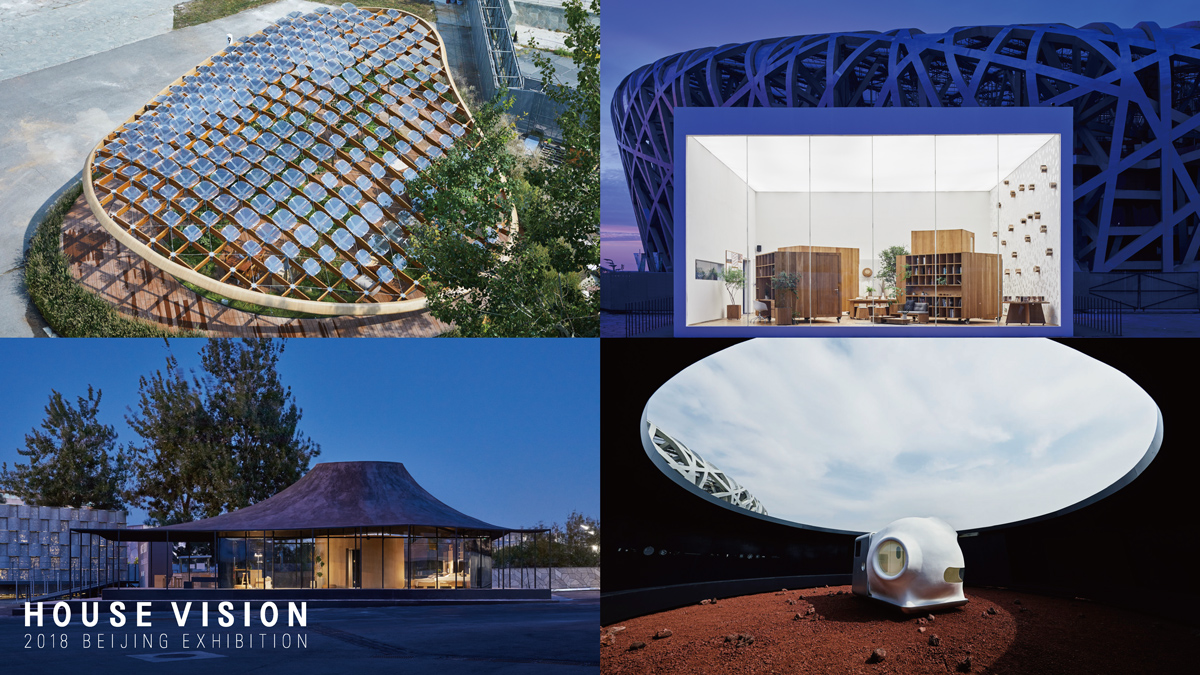
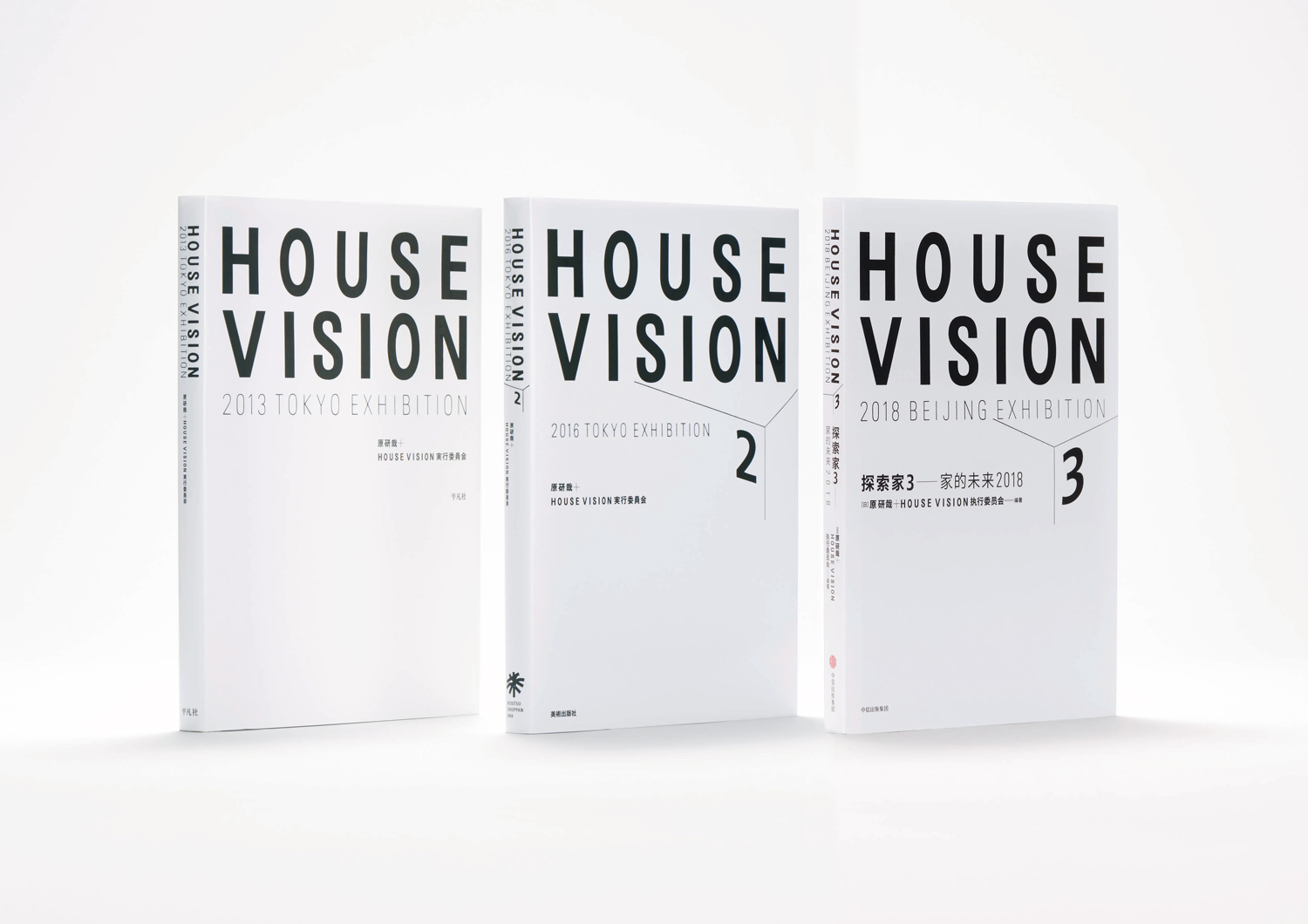
“HOUSE VISION” exhibition (2013–). A project that brings together architects and companies to present full-scale proposals for the homes of the future.
Shaping the Future through“High Resolution Tour”
ー As I listen to you speak, I get the sense that you enjoy a freedom that is only possible because you are part of an organisation like Nippon Design Center. You view things from a bird’s-eye perspective.
Hara When I was 33, I did try to strike out on my own once. But I was persuaded to stay, with people saying, “Why not just be independent within the Design Center?” When I first heard that, I didn’t quite grasp what they meant, but it eventually clicked.
This company is a bit like a school. Having an independent research unit within the Nippon Design Center means that, rather than being assigned work by the company, I only take on projects that come to me from outside; however, the finances are completely transparent. So, as long as I’m in the black, I’m free to do whatever I like. If I were a freelancer, once I’d gained enough experience to secure large contracts, I might become afraid of reducing that income. But as long as I belong here, I don’t have to worry about such things. Because my salary is fixed, I can focus entirely on whether the work is meaningful to me. I think there’s a certain freedom in that sense. As a result, about a third of my workload consists of projects that generate a solid profit, whilst the rest are projects that barely make any money (laughs). But it’s precisely because of that balance that I can devote my time to the work that really needs doing.
ー By ‘meaningful work’, do you mean work that seems interesting even if it doesn’t make money?
Hara I’m working on things without even knowing exactly why I’m doing them. But I have a gut feeling that this is work that will open up the future. One example is my website, “High Resolution Tour”. I started it in 2019, just before the coronavirus began to spread. I often work abroad, but the more I travel, the more I realise how unique and fascinating Japan is. So I thought I’d introduce a selection of spots from the perspective of someone flying low over the archipelago and peering down, as if to say, “This is another face of Japan.” With the aim of reporting on hotels and traditional inns (ryokan) in Japan that I find particularly noteworthy, as well as places and facilities well worth seeing, I have visited over 70 locations to date. I have taken and edited the photographs and videos myself, and written the accompanying essays.
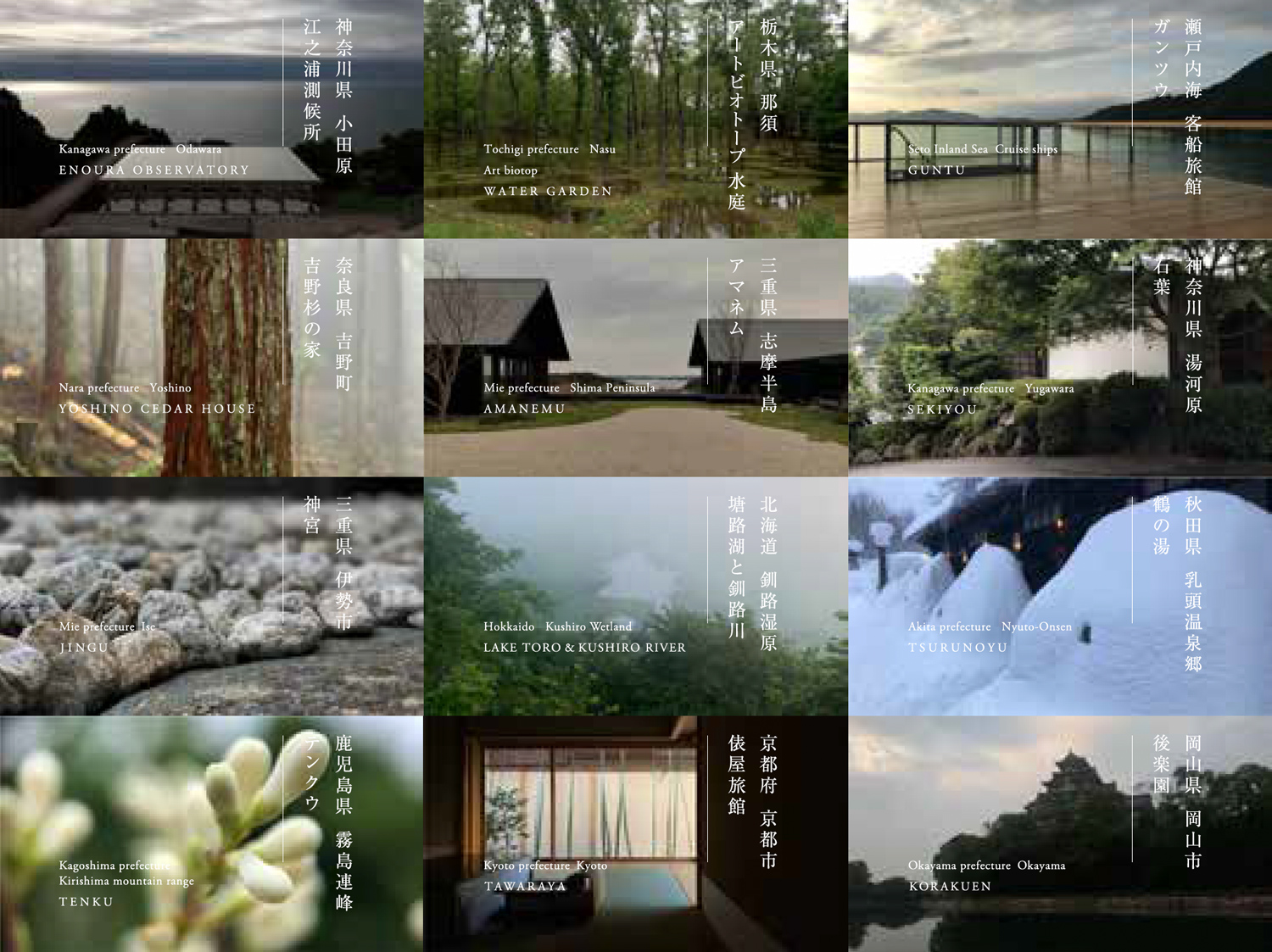
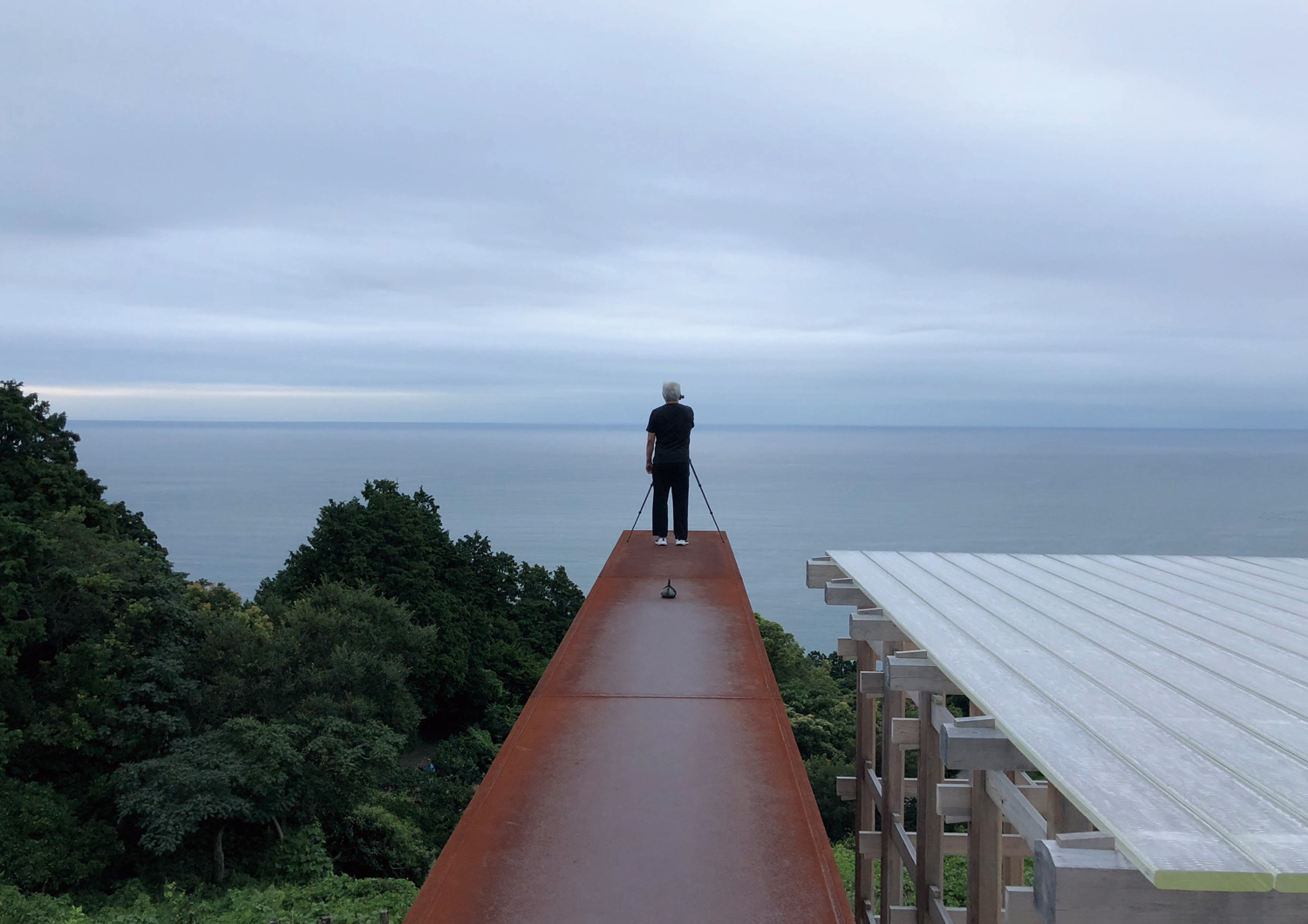
“High Resolution Tour” (2019–). A project that re-examines the Japanese archipelago by flying low and observing it in high resolution.
Hara As a result, I’ve gradually developed a feel for the geography of the Japanese archipelago, and whether it’s Shiretoko or Okinoshima, I’ve come to have a rough idea of the character of the land there. I’m starting to see where the accommodation facilities are located and in what numbers, which areas remain undeveloped, what makes each place interesting, and what kind of journey would be most rewarding. For the time being, I’m doing this as my own fundamental research, but it should eventually find its way into the design work I’ll be involved in. I believe that’s where the future lies.
ー Does that mean you’re sowing the ‘seeds’ for future work?
Hara Projects that have resonated with me leave a lasting impression, don’t they? As I accumulate layers of experience, I feel that each one gradually begins to connect with the others. Rather than deliberately sowing seeds, it feels as though, as experiences accumulate, new points of connection naturally emerge one after another.
Japan Isn’t ‘Tired’ Yet
ー As you travel around Japan, Hara-san, I sense that you cherish the landscape. There is a concern that this landscape could be destroyed by overtourism.
Hara I suppose I’m looking at the landscape itself, if anything. Overtourism would certainly be a problem, but that’s only part of the story; from the perspective of the tourism economy, Japan still has plenty of capacity to accommodate visitors. Per-person spending is by no means high, and up until now, growth has been driven by the sheer volume of visitors. Tourist destinations are focusing their efforts on upgrading accommodation facilities to improve quality, and there is certainly potential to increase revenue by encouraging visitors to travel from further afield and stay for longer.
However, at the same time, I would like to see the enjoyment of travel for ordinary people—those with lower spending power—also being prioritised. We are perfectly happy to receive a fair price from people who spend tens of millions on a week-long trip by private jet, but as things stand, they have not yet come to Japan because there are still very few places suited to them.
Adrian Zecha, the founder of Aman, is Indonesian, but it was because he understood the needs of wealthy Westerners that he was able to create a luxury resort brand. However, I believe this was greatly influenced by Indonesia’s colonial history. As Japan was never a colony, it should confidently welcome visitors from Europe and America by welcoming them through its own culture; Japan is, in fact, one of the few places in the world capable of doing so. Every bay, inlet and coastline across the Japanese archipelago is simply magnificent. Sixty-seven per cent of the country is covered by forests, making it the third-highest in the world. It possesses a unique culture, and is rich in both cuisine and crafts. Whether it’s climate, landscape, culture or cuisine, every aspect is of the very highest calibre. I believe it is the Japanese themselves who are least aware of this. They fail to recognise the value of the culture and landscape they take for granted, and there’s even a sense that they are trying to forget Japanese culture—which is quite frightening. It is actually foreigners and overseas capital that recognise Japan’s potential; they understand Japanese culture and are already taking action.
ー Are any projects for tourist destinations currently underway?
Hara A project is underway, backed by Hyatt Hotels and Kiraku—a company focused on regional revitalisation—to establish around 20 luxury hot spring ryokans under the brand “ATONA" over the next ten years. The first is due to open in Yufuin in 2027, followed by Yakushima, Hakone and Kuju in quick succession; I am serving as the brand director for this initiative.
Apart from that, I was in charge of renovating a building on the shores of Lake Shiratoru in the Kushiro Marshes, in Shibecha Town, Hokkaido. The surrounding area is covered by unspoilt marshland. We were responsible not only for the interior design and visual identity, but also for shaping how visitors experience the surrounding landscape, and I believe it has become a fascinating place. However, initially, there was a disconnect with the management, and the gift shop was stocked with the sort of souvenirs commonly found at Japanese tourist spots. We explained this to them carefully and persuaded them to refrain from doing so. When one finds oneself in such magnificent natural surroundings, what does one actually want? How about a pair of high-quality binoculars, for example? It is the sort of place where, if you are ever going to have the opportunity to use high-quality binoculars in your life, surely this is the moment.
If you take an early morning walk in Tokyo—in Inokashira Park or the green spaces along the Kanda River—you’ll find groups of elderly people gathered with their high-end cameras. They’ll be lined up, holding their breath as they wait for a kingfisher to perch on a stake by a small pond. I want to let people like that know about this place. It’s fine for tourism to cater to a wide range of people. I believe we should create facilities where ordinary people can enjoy every corner of Japan.
ー The ‘beauty of Japan’ lies at the heart of Mr Hara’s designs.
Hara I’m not a ‘Japan-lover’, nor am I a patriot, but having worked extensively overseas, I feel that Japan hasn’t ‘run out of steam’ yet. Since the Meiji era, Japan has steered towards Westernisation, and whilst it succeeded by focusing its efforts on manufacturing after the war, that phase has now come to an end. Now is the time to turn our attention to culture. Culture is a nation’s resource. There is no other country that has maintained a single culture for over a thousand years; including its history, no other nation is so rich in resources. The same applies to this country’s landscape. Yet there are still far too many designs that reduce this richness to stereotypes, and seeing them fills me with a sense of unease. The essence of Japanese beauty lies in the meticulous and careful creation of empty space. It is a beauty experienced through mutual appreciation: the presence of a single object standing alone in an empty space draws one’s attention to it.
Needs Are an Illusion—The Philosophy of MUJI
ー Well then, could you tell us how you came to take over the art direction at MUJI from Ikko Tanaka?
Hara Mr Tanaka contacted me out of the blue. He told me, “When I first started working at MUJI, it was so fascinating I couldn’t even sleep at night.” I thought that must be true. However, I felt it would be difficult for me to get involved with a brand that was already so successful and make it even more successful, so I spent a night thinking it over. At that point, I realised there was still ample potential to expand MUJI globally, and I decided to join the team, thinking that if I could work on that, it would be worthwhile.
When I took on the role, there were 5,000 items; that number has now grown to 7,500. We also invited Naoto Fukasawa to join us as an adviser to review our product range. We launched a hotel concept and have been exploring ways to allow people to experience the MUJI philosophy through everyday life. We’ve devised flexible services such as the mobile shop “MUJI to GO”, attempted to make the MUJI way of thinking a part of people’s ‘homes’, and developed a tagging and labelling system that supports multiple languages and currencies… Recently, I was asked to “write about what MUJI is”, so I’m compiling an article on the advertising and promotions I’ve been working on since 2003. It’s truly an archive in book form. As it is about time to pass the baton to the next art director, I am beginning to organise the work I have done.
ー MUJI, which initially stood as an alternative force questioning mass production and mass consumption, became a new standard under your direction, Mr Hara.
Hara I don’t think it has become the norm. The fundamental principle remains unchanged: ‘a way of life that is simple yet luxurious, where one feels no sense of inferiority and, indeed, takes pride in that simplicity’. MUJI was founded in 1980, when Japan was at the height of the bubble economy. It was also an antithesis to that state of saturation. Since then, the bubble has burst, and whilst Japan faces concerns over population decline and depopulation, the world’s population has exceeded 8 billion—double what it was when I was born, and four times what it was after the Second World War. It is said that the amount of grain the Earth can produce has already reached its limit, and marine pollution and global warming are also serious issues. Nevertheless, AI continues to drive the economy forward, and there is no turning back from this excess. MUJI’s appeal is built on the shared sentiment of those who, faced with this excess, feel that ‘something isn’t quite right’ or that ‘this is a bit worrying’.
If we were to simply become a ‘standard’ retailer, offering everyday goods at reasonable prices to everyone, we would have no value whatsoever. We must identify and safeguard our philosophy and the niche we are meant to occupy. As I am, after all, merely a member of the advisory board and a creator, I have no managerial authority; however, in MUJI’s case, a relationship has been established where management and creators can speak to one another on an equal footing. It is a company that takes frank advice very seriously.
ー What sort of advice do you offer?
Hara Once a month, the four members of the advisory board meet with senior management for about two hours. As our primary role is that of creators, we all express our candid opinions. MUJI has a vast range of products. Rather than giving each item a strong individual character or distinctive design, we prioritise creating the atmosphere created by the collection as a whole.
Similarly, their advertising does not boast about or explain the appeal of their products, but rather subtly suggests that ‘this is another way of living’.
They avoid advertising that stimulates desire, taking care to ensure that a sense of restraint—the feeling that ‘this is good enough’—gives rise to intellectual satisfaction. Transparency rather than flamboyance. We aim for designs that allow the viewer or user to fill in the blanks as they see fit.
ー Why do you think Ikko Tanaka chose Mr Hara as his successor?
Hara I was unable to ask him about this whilst he was still alive, so I do not know. I am not related to Mr Tanaka by blood, nor did we speak all that often. I was approached in the summer of 2002, but as I was swamped with work at the time and could not act immediately, it all began when I went to see Mr Tanaka in January of the following year to introduce him to Naoto Fukasawa. However, he passed away suddenly the very next day. I’d asked him to redesign ‘Yu-Pack’ for the “RE-DESIGN: The Daily Products of the 21st Century” exhibition in 2000, so I imagine he must have appreciated that project, as well as the work I did that same year on the white-themed brand identity for Matsuya Ginza.
ー I feel that MUJI is nurturing its users.
Hara I was aware that by raising users’ lifestyle literacy, the MUJI market would be revitalised. People who can create their own living spaces are MUJI’s ideal customers, and nurturing such people is vital. That’s why we talked about homes, thought about how to build them, and undertook renovations… though we were perhaps a little too quick off the mark. At the time, I described this as ‘the education of desire’. Desire tends to drift in a rather haphazard direction, but I believed that if we could refine it and raise its quality, a country with such refined desires would inevitably produce an ever-increasing number of excellent products. Design must possess the ‘power to awaken’—in other words, an educational power. I detest the word ‘needs’; I believe such a thing is an illusion. It is not that this fan is created because there is a need for it; rather, by creating the fan, we simply give that desire a direction. It’s like creating a mouth-watering curry packet: if it looks delicious, you’re drawn towards it. That kind of attraction is always at work. MUJI's concept of ‘this is good enough’ aims to move in the opposite direction. I’d like to see a country where people have a high level of literacy in everyday life.
The Path of Design, Not That of a ‘Designer’
ー Finally, may I ask why you decided to become a designer? I understand you once worked at Eiko Ishioka’s studio?
Hara From primary school through to secondary school, I was looked after by a couple who were both painters. They were Ema and Fumio Kono, who painted in the style of the Vienna Fantastic School, and under their influence, I spent my time painting—or rather, creating numerous works on large canvases. When considering my future path, I realised I couldn’t be top of the class academically, so I decided to pursue the arts instead, and applied to the Tokyo University of the Arts and Musashino Art University. As a result, I was admitted to the Department of Basic Design at Musashino Art University. It was there that I met Professor Shutaro Mukai, who had helped establish the department. Professor Mukai viewed design not merely as a form of expression, but as a philosophy for interpreting life and the universe—in other words, ‘design studies’. By the time I graduated, he had made me realise that there is only one form of design; it is not something to be divided into separate fields, but rather an intelligence that humans—who shape the external environment—must possess. I went on to postgraduate study, but as I also wanted to learn how to become a designer, I first worked for a year under Professor Shuji Takada, who had taught me at university; those were joyful days spent discussing design every evening. After that, on a whim, I asked Professor Takada to introduce me to Eiko Ishioka, and I worked at her studio for a year.
ー Were you put through your paces?
Hara It wasn’t so much that I was treated as an equal. Ms Ishioka is a vegetarian, and the staff took turns making lunch, but whenever it was my turn, she’d look me straight in the eye and say, “The salads you make are rather run-of-the-mill.” I’d put my own spin on it—slicing the peppers into rounds and so on—but I suppose it really was rather ordinary. “That soba bowl you’re holding right now is lacquerware. But it’s meaningless to you,” she’d say. Since I didn’t understand the value of lacquer, she was absolutely right, of course, but those were days when I, an immature young man in my early twenties, was sliced up helplessly like a loofah being test-cut with a Japanese sword—showing my foolish cross-section as I rolled about (laughs).
On one occasion, “Rolling Stone” magazine commissioned me to put together a special feature on Japan and asked, “Mr Hara, do you know anyone with a good story?” I did my very best to come up with ideas, but none of them were accepted at all. Ms Ishioka, on the other hand, would sketch head-on a bride in a pure white dress straddling a Suzuki 750cc, racing along at 120 kilometres per hour. She was truly brilliant at that sort of rough sketch. I simply couldn’t hold a candle to her. The things I was proposing—such as a Negoro lacquer tray, which must have seemed rather old-fashioned—just didn’t resonate with Ms Ishioka.
But it was precisely that shock that made me resolve to become a “-ner”—a designer in the practical sense. So, I asked to leave Ms Ishioka’s studio, and just as I was finishing my postgraduate thesis at the eleventh hour, I happened to see that Nippon Design Center was recruiting mid-career staff, so I applied. I worked on a series of short-term contracts before becoming a permanent employee; it wasn’t a struggle, and I could work on my own designs in the free time I had outside of client work.
I felt there was fertile ground here where I could put down roots.
Nowadays, whilst I do identify as a designer, I feel that the underlying philosophy is beginning to take shape as it merges with my experience. I want to change the very nature of what it means to be a designer.
ー I think Japan has now reached a stage where it needs to reflect on design studies and design itself.
Hara Yes, I absolutely agree. Because we’ve focused so much on economic activity, design has not been given the respect it deserves. I’d like to see design studied as part of a general education, rather than merely as fine art. If everything is elevated to the status of ‘art’, it can start to feel somewhat dubious. We need to be firm to ensure design doesn’t end up that way.
ー Thank you very much for your valuable insights, including your proposals for the future of design.
Enquiry:
Nippon Design Center, Inc.
https://www.ndc.co.jp

Home Archive Communication Education Exchange Proposal Research Company Membership Contact
Copyright © PLAT. All rights reserved